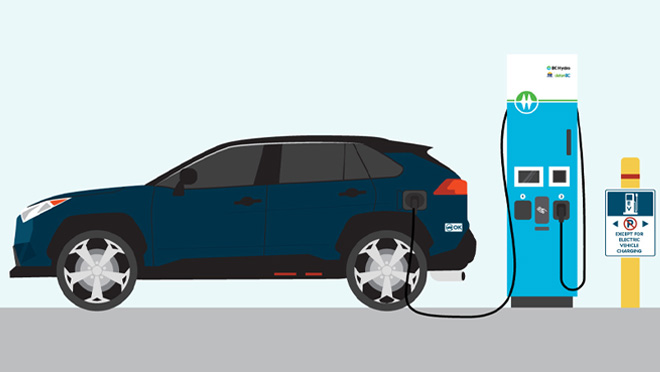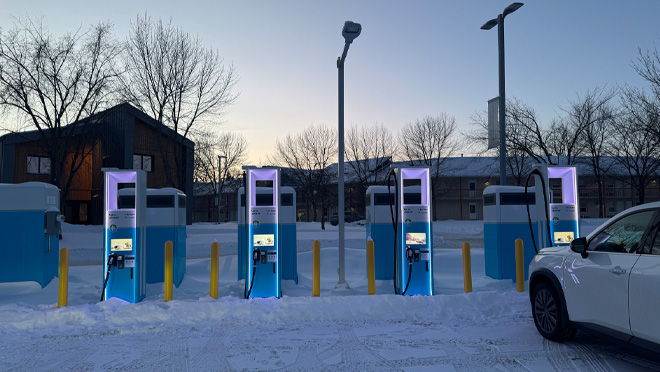
Electric vehicles (EVs), like all vehicles, feel the effects of cold winter weather. Battery range can drop and charging takes longer, whether at home or on the go, so it's useful to plan ahead to keep your journey safe and smooth.
Tips for charging your EV in cold weather
For EVs, cold temperatures can slow down the battery process in the vehicle that allows it to create power. This means charging speeds can be slower both at home and at public EV chargers.
Winter driving also means using more features to keep you and your car warm, like cabin heating and seat warmers, which can further reduce your battery range.
Here's some useful tips to help extend your EV's range and charge your EV during colder weather conditions:
1. Pre-condition your EV battery
Pre-conditioning your battery will allow your EV to accept faster charging speeds at public chargers. For most EVs you can do this with the car's built-in navigation feature or the manufacturer's app. Check your owner's manual for specific instructions for your model.
2. Pre-heat your EV's cabin while charging
When you preheat your EV while it's charging, you're using power from the charger instead of draining your battery, so you can keep more range for the road.
3. Get the right winter tires and keep tires properly inflated
Using winter tires with extra or high load rating helps with the extra weight from the EV's battery. This extends the life of the tires. Keeping tires properly inflated can also extend your EV's range by up to 10%. Make sure to check tire pressure regularly when the tires are cold.
4. Use our public charging network to help with reduced battery range and for driving breaks
As your range drops, you may need to charge more frequently. BC Hydro public charging sites can help while you're on the go. Most of our sites offer fast chargers and we have one of the most reliable EV charging networks.
In winter conditions, more regular driving breaks may be needed and can help reduce the risk of accidents related to fatigue. We have 28 EV charging sites at rest areas on B.C.'s highway system so you can recharge yourself and your vehicle. This includes Britton Creek – Rest Area and our new Revelstoke EV charging hub with enhanced amenities.
5. Get a Level 2 home EV charger
If you're still using a Level 1 home charger that plugs into a standard 120V outlet, upgrading to a Level 2 charger will provide a faster charge to help with reduced EV battery range during the colder months.
Get a rebate of up to 50% on eligible Level 2 chargers, with an extra $250 bonus if you choose a Peak Saver eligible device and enrol in the program.
6. Keep charger ports and connectors clean and dry
Snow and ice can block the charge port door and make the charger connector button stiff. Use a dry cloth to wipe connectors, don't force a frozen latch and give the button a try before plugging in.
Make sure your vehicle's charging port is close enough to the charger that there will be slack in the cable once it's plugged in. This will make it easier to unplug after your charge.