
Skip to content


Non-Integrated Areas

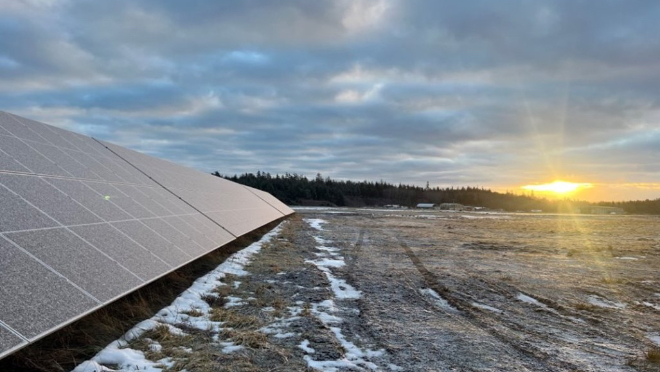
Sunrise on Haida Gwaii at the Solar North Project.

What are Non-Integrated Areas (NIAs)?

We provide reliable and affordable electricity to British Columbians. We do this by providing electricity to 95% of the population through an integrated system, which is powered primarily by renewable electricity.

Not everyone in our service area is connected to the integrated system. We serve some communities through standalone microgrids in remote parts of the province, which are called Non-Integrated Areas (NIAs).

NIAs at a glance:

  • 14 NIAs supply power to 28 communities and 12 First Nations
  • 7,500 customer accounts
  • 120,000 megawatt-hours of electricity used each year.

NIAs are standalone microgrids, each with their own generation and distribution system. Power comes from a mix of diesel and renewable energy sources. In some NIAs, diesel is the primary power source, in others it serves as a co-generation or backup source.

Across all NIAs, approximately 45% of the energy comes from renewable sources, with diesel generating the remainder.
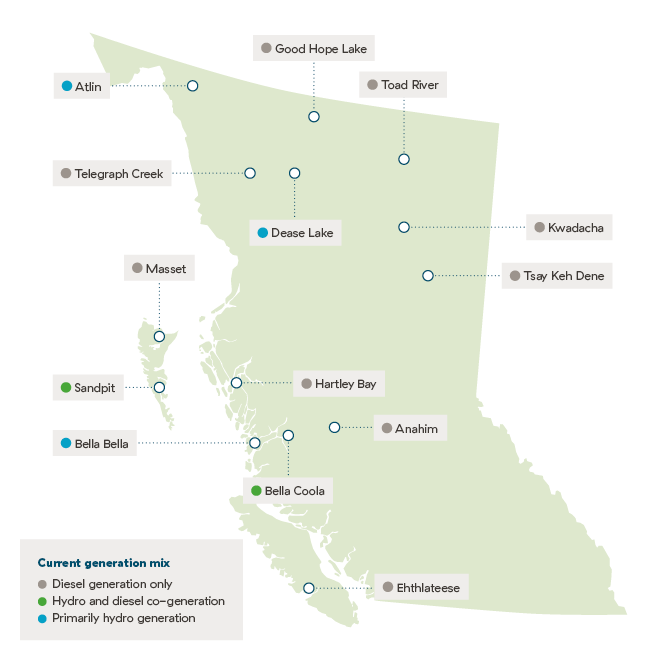
Map of British Columbia showing locations around the province showing various power generation sources: diesel generation only, hydro and diesel co-generation and primarily hydro generation. We serve 14 NIAs in B.C. Diesel is the primary power source in some of the NIAs, whereas it serves as a co-generation or backup source in others.

How we're improving service in the NIAs

Microgrids are upgraded to integrate renewable energy.

Providing power in these remote communities comes with unique challenges. Many NIAs rely heavily on diesel generation due to the availability of local energy resources. Due to remoteness and geography, NIAs experience longer and more frequent outages than most customers on the integrated system.

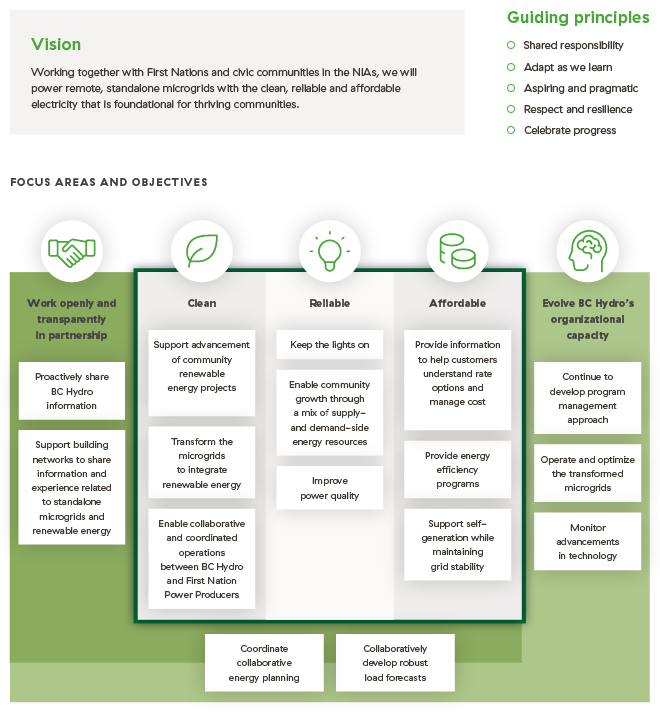
We're addressing these challenges by:

You can explore the NIA progress report [PDF, 3.9MB] for more detail on this work.

Since 2018, we've worked openly and transparently with First Nations in the NIAs to reduce reliance on diesel generation. This collaboration led to the development of the NIA strategy, which will be finalized in late June 2026 after three phases of engagement. The strategy guides our actions to provide clean, reliable, and affordable electricity for years to come.

Working with First Nations to implement the NIA strategy

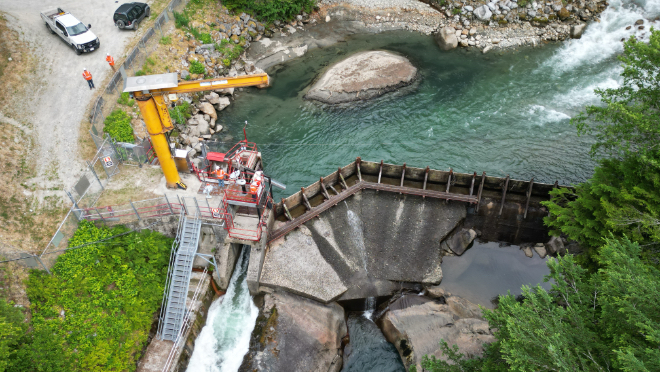
Clayton Falls Hydroelectric Generating Station in Bella Coola.

Reducing diesel use is a shared priority with First Nations and the province. Using less diesel means cleaner air, quieter communities, and a lower risk of environmental spills.

We're advancing reconciliation by building respectful relationships and working jointly on shared priorities like climate change and reducing diesel reliance.

First Nations have shared that diesel generation creates tension between their role as stewards of the land and the need for reliable electricity. To address this, we're partnering to integrate renewable energy from community-led energy projects (e.g., solar farms) into microgrids to reduce diesel use.

We're also implementing programs and initiatives to improve reliability and affordability. Together, we can support communities in ways that align with their values and help them grow and thrive.

As communities grow, we’re planning ahead together to meet increasing demand. We’re co-developing Community Context Reports (CCRs) for each NIA.

Each CCR provides a roadmap for meeting future electricity needs, including:

  • Current state of the microgrid.
  • Emerging challenges for the electricity supply.
  • Planned activities that will address these challenges.

You can explore the Community Context Reports for more detail on this work.