

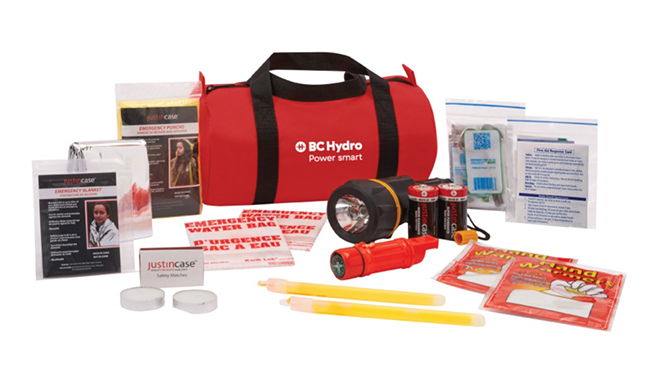
New BC Hydro survey highlights a significant preparedness gap as another round of wet and windy weather hits the province.
Summary:
- Earlier this month, a series of powerful storms caused outages affecting nearly half a million BC Hydro customers across the province.
- With more wind and heavy rain hitting parts of the province, a new survey finds 92% of British Columbians believe emergency risks are increasing, yet only 17% have a complete 72-hour emergency kit at home.
- Most residents have taken at least one preparedness step, but few have completed the basics needed to manage through a prolonged outage or emergency.
- Preparedness levels vary across the province, with communities that have experienced severe weather and wildfires generally reporting higher levels of readiness.
- BC Hydro is encouraging customers to take simple actions now to be ready for the next major storm or emergency.
VANCOUVER: After a series of powerful storms caused outages affecting nearly half a million BC Hydro customers earlier this month, wind and rain are once again serving as a reminder of how quickly severe weather can disrupt communities across the province. Yet a new BC Hydro survey finds that while nearly all British Columbians recognize emergency risks are increasing, relatively few are fully prepared.
The survey found 92% of British Columbians believe emergency risks are increasing, yet only 17% report having a complete 72-hour emergency kit at home. The findings highlight a significant gap between recognizing the possibility of an emergency and being ready when one occurs.
With severe weather continuing through the fall and winter storm season, BC Hydro is encouraging customers to take some simple preparedness steps now, before the next major outage or emergency.
"After the storms we've seen this month, emergency preparedness is especially top of mind for British Columbians," said Whitney Deane, BC Hydro spokesperson. "Our survey shows people understand the risks and many have already started preparing, but there is more work to do. Building a complete emergency kit and making a household plan are simple actions that can make a meaningful difference when an emergency occurs."
Concern is high. Preparation remains a work in progress.
While only 17% said they have a complete emergency kit, the survey found that many British Columbians are already taking some steps to prepare.
More than seven in 10 residents reported taking at least one preparedness action during the past year, including:
- 40% stored additional food or drinking water.
- 35% signed up for emergency alerts.
- 26% discussed emergency plans with household members.
However, preparedness experts note that individual actions are most effective when combined into a broader emergency plan and supported by a complete emergency kit.
Experience drives preparedness
British Columbians who have lived through severe weather, wildfires and extended outages are generally more likely to take steps to prepare for future emergencies. The survey found preparedness levels varied across the province, with some of the strongest preparedness habits reported in regions that have experienced significant weather-related disruptions in recent years.
By contrast, the Lower Mainland and Fraser Valley showed one of the province's largest preparedness gaps, suggesting awareness of emergency risks does not always translate into action.
By the numbers:
- Lower Mainland and Fraser Valley: Despite high awareness of emergency risks (93%), only 28% have signed up for emergency alerts and 10% have created or updated a household emergency plan.
- Southern Interior: 51% have signed up for emergency alerts, 44% checked or updated an emergency kit and 20% created or updated a household emergency plan.
- Northern B.C.: 34% own backup power equipment, 42% checked or updated an emergency kit and 34% purchased or updated emergency supplies.
- Vancouver Island and North Coast: 41% have signed up for emergency alerts and 20% have completed emergency preparedness or first aid training.
The best time to prepare is before an emergency
With storm season underway, BC Hydro is encouraging customers to prepare before severe weather or an emergency occurs by taking a few practical steps:
- Build or refresh a 72-hour emergency kit with water, food, medications, flashlights, batteries and first-aid supplies.
- Create a household emergency plan so family members know how they will communicate and where they will go if services are disrupted.
- Download the BC Hydro app and familiarize yourself with the outage map before severe weather occurs.
- Stay at least 10 metres away from downed, damaged or low-hanging power lines and always call 911 to report them.
Learn more:
- To learn more, visit bchydro.com/safety.
Contact:
BC Hydro Media Relations
Email: media@bchydro.com
Phone: 604 928 6468