

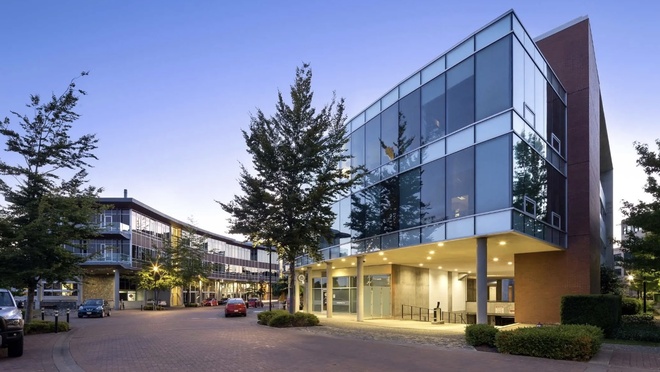
 One-page sector spotlights on demand response opportunities feature brief looks at specific customers, including Jawl Properties in our one-pager on office buildings.
Alliance's growing role includes opportunity assessments
This fall, we've beefed up resources to help you deliver our behavioural demand response (DR) program, including a key upcoming training initiative that will equip you to identify potential DR customers and help them prioritize measures that best fit their operations.
Our demand response opportunity assessment is designed for energy managers and Alliance members, including several who attended a webinar on the initiative in August.
"With the opportunity assessment, Alliance members will visit the site, review systems such as BAS, HVAC, and EV charging to identify at least three demand response opportunities," says BC Hydro DR program manager Alec Zaine, noting that Alliance members are paid $3,500 once the customer enrolls in the DR program.
Key components of the opportunity assessments include:
- Energy managers and key account managers identify promising sites.
- An Alliance member meets on site to review key things that can be temporarily reduced or shifted.
- Alliance members work with energy managers to identify three realistic DR behaviours the customer can commit to during events.
Where are the greatest opportunities? It depends on the sector, but Zaine says the top three behaviours that came out of the last DR season were lighting reduction, HVAC adjustments, and shifting or reducing equipment scheduling.
What is demand response? Spread the word about the basics
Demand response events occur during short periods of high demand on our system. Customers who shift their typical electricity use to before or after an event earn a reward. Events last up to four hours each, mainly on winter days between 3 p.m. and 9 p.m.
"Demand response is still very new, so a lot of people are just starting to dip their toes into it," says Zaine. "On the whole, we're relatively unknown."
Customers can be reluctant to get involved in a program they have never heard of. But once the conversation starts, Zaine finds that many customer operations are perfectly suited to demand response.
He tells the story of meeting with one customer who flatly told him that DR likely wasn't a good fit. Zaine persisted, sent a bunch of questions that included whether any of the customer's buildings were open as late as 8 p.m. or 9 p.m., whether they had automation systems and whether they were tenant-owned.
"And then we met," he says. "Sure enough, we identified seven buildings that had building automation systems, so we could potentially schedule things when there's a response event. We identified buildings that are tenanted only by one company, which makes it a lot easier."
Sector-by-sector one-pagers provide insights, but Alliance plays a huge role
We're soon launching a new generation of sector‑specific one‑pagers designed to make DR simpler to understand and easier to sell.
These refreshed resources are built to answer the questions customers actually ask: "What's in it for us? What can we do, realistically, during an event?" This helps customers better understand what they can do during a demand response event.
"We've shifted from 'what demand response is' to 'here's what's in it for you, here's what you can do,'" says Zaine, who leads the behavioural DR program on BC Hydro's capacity team. "The new one‑pagers are very sector‑specific, with opportunities and best practices for each sector."
Over the next few weeks, existing one-pagers get amped up with more information, and one-pagers for new sectors — including heavy manufacturing and forestry — will be added. You'll see a stronger emphasis on benefits, best practices and opportunities — not just on participation rules.
Here are a few other feature and program upgrades to look for:
- A new demand response opportunity assessment that equips Alliance members to work with energy managers to explore DR opportunities.
- Improved notifications: Customers can now have two contacts per site and opt into text message alerts.
- A new customer dashboard: Due later this fall, the dashboard will give DR participants clear feedback on how they performed during events and how much they're earning.
- Energy storage: Boosted incentives to our business customers support the acquisition, installation and operation of energy storage systems.
Sneak peek at a sector one-pager
Instead of a generic overview of DR, each piece highlights the value proposition and lays out a menu of practical options customers can take during events — from lighting and HVAC adjustments to scheduling changes.
A new one-pager, on the chemical industry, delivers a roadmap for identifying and managing demand response opportunities. It draws in part from the experience of an existing customer in a real-world industrial setting.
Highlights of the chemical industry one-pager include:
- Sector-specific opportunities: Identifies flexible loads including pumps, compressors, chillers, large motors, and electrochemical processes, along with opportunities to shift batch production.
- Practical best practices: Provides guidance on developing an event plan, assigning responsibilities, monitoring operational impacts, and safely returning equipment to normal operation.
- Automation guidance: Shows how control systems can support fast, consistent responses, including pre-programmed shutdown sequences.
- Risk management: Highlights the need to consider safety, product quality, inventories, staffing and customer requirements before and during an event.
- Real-world proof: A detailed Ferus Inc. case study shows how one B.C. chemical producer achieved an average 7.3 MW demand reduction while maintaining operational flexibility.
- Actionable ideas: Offers a concise menu of potential demand-reduction measures customers can consider for their own facilities.