

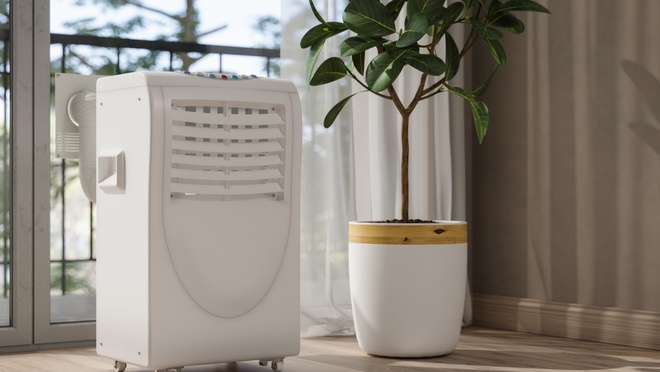
 Portable air conditioners are a popular choice in B.C., particularly among renters, for their lower cost and versatility. Until August 21, get an instant rebate on select portable and window air conditioners, along with air purifiers.
Get the right type and size for your home
The best air conditioner is not the one that cools the most. Weigh your cooling needs to get the comfort you want at the lowest lifetime cost, taking into consideration year-round energy use and the fact that climate change is likely to increase cooling demand down the road.
Research we conducted last summer showed that nearly 70% of British Columbians now have air conditioning at home. This is a huge spike since 2001, when only one in ten B.C. homes had it. About 40% of British Columbians now using AC bought their first unit between 2021 and 2025.
The most popular choice? Portable and window are the easy choice due to their affordability and ease of installation. But the use of heat pumps, which offer the most efficient heating and cooling, is on the rise. Almost 27% of AC-equipped homes in B.C. have heat pumps.
And it's going to get warmer. Across Canada, climate projections suggest many cities could experience four times as many 30 C°+ days by the second half of the century. The City of Vancouver's climate adaptation team projects more frequent and longer heat waves, with nine times as many days each year over 30 C° as there are today.
Did you know? Through August 21, 2026, we're offering instant rebates of $50 on select high-efficiency portable and window air conditioners, along with $30 rebates on select air purifiers and $10 savings on water saving showerheads. You could also be eligible for up to $4,000 in rebates for replacing your current electric heating system with a heat pump.
Your choice of air conditioning, and whether you need it, depends on a few key factors.
Consider your cooling needs, keep a keen eye on energy use
For most people in British Columbia, a heat pump is now the gold standard if you own your home. It offers greater energy efficiency, quieter operation and year-round climate control with both heating and cooling. But the right choice depends heavily on your housing type, budget, and how often you need cooling.
Some of us still get away with no air conditioning at all, through a combination of smart use of window coverings, air flow and/or strategic use of floor fans or table fans. Others use portable AC units, which are particularly attractive for renters, while many are taking advantage of rebates of up to $4,000 for switching to heat pump.
Keep these key considerations in mind as you come up with a plan for cooling your home:
1. Match the technology to your situation
Portable air conditioners are great for renters, cool one room at a time, and are an option in buildings where window units or heat pumps aren’t allowed or practical. They’re less expensive — typically between $400 and $800 — and can be moved between rooms, but are less efficient, noisier, and take up floor space. Choose a more efficient portable unit and you could qualify for a $50 instant rebate.
Window AC units are also good for renters, can be eligible for a BC Hydro rebate, are usually more efficient than portable units, and are still relatively affordable at between $300 and $700. But installation can be awkward, part of a window is blocked, and some stratas don’t allow them.
Ductless mini split heat pumps don't require existing ductwork, offer both extremely efficient cooling plus heating, are quiet and offer room-by-room temperature control. Ideal for detached homes without ductwork, townhomes and condos where stratas allow heat pumps. But upfront costs are significant, and indoor wall units are visible.
Central heat pump or central air conditioners are the most efficient, offer whole-home comfort, and room-by-room temperature control. They're best for detached homes with existing ducts, are quiet, and deliver the highest comfort level. Cons are that installation costs are high and energy costs can be high as you cool the entire home.
Did you know? If you have received a recommendation letter from your regional health authority's Home Care Program, you may be able to receive a free portable air conditioner. See the air conditioner offer details to learn about eligibility and how to apply.
2. Understand operating costs
Used sparingly in certain rooms, portable air conditioners can be the go-to option when lower upfront costs and energy costs are considered. But as your cooling demands increase, the smart math shifts to heat pumps.
A 1.2 kW portable AC unit running eight hours a day uses about 9.6 kWh of electricity. A high-efficiency heat pump could use significantly less energy, and if it replaces electric baseboards as your primary heat source in the cool months, it could deliver big savings. Our heat pump calculator can give you a rough idea of potential savings for your home.
Opt for an ENERGY STAR-rated model when available — use our Power Smart Shop to find the most efficient out there. These are the most energy-efficient models on the market and tend to be higher quality.
3. Reduce heating needs before buying equipment
Even if you're going to buy an AC unit, optimizing your home to reduce heating and cooling load can reduce the size and cost of AC and heating equipment required for year-round comfort.
You can significantly reduce your heating and cooling needs by:
- Upgrading your home's envelope by draft proofing and/or upgrading insulation.
- Adding window coverings or learning how to use existing shades strategically
- Blocking the sun in summer by using external shades or planting a deciduous shade tree outside south or west-facing windows in your home.
- Opening windows to use cool night-time and morning air to cool your home, then closing them as soon as the temperature outside is higher than it is in your home.
- Using ceiling and floor fans to make rooms feel cooler (and only using them when the room is occupied).
- Reducing internal heat by running dishwashers at night, using small appliance to avoid using ovens and cooktops during heat waves.
4. Size really matters
Whether it's a portable or window AC unit or a heat pump, selecting the right size of unit is key.
One of the big reasons we highly recommend using a member of the Home Performance Contractor Network (HPCN) for heat pump installation — and why it’s required to qualify for a heat pump rebate of up to $4,000 — is that seasoned experts know how to select the right size of unit for your home.
Installing a pump with a capacity that's too big for your home may provide less comfort as it cycles on and off frequently, and could result in higher operating costs. The sweet spot is a unit that's powerful enough to provide year-round comfort in line with what you’re using it for.
A qualified contractor will consider factors including your region's climate, your home and occupants' heating and cooling needs, and whether you have a backup heat source.
5. Set realistic temperatures
Many of us cool our homes more than necessary, both in the temperature we set and in how we use cooling.
- Set your air conditioner to 25.5°C (78°F) or higher. You can save up to 5% of cooling costs for every degree you raise it.
- For portable or window units, place them in the rooms) where you need the most relief and comfort.
- Keep an AC unit's components clean. Dirty filters, air intakes or grills can reduce performance and make the unit loud when it's operating.
- With heat pumps, set the temperature and forget it. They work best when holding a steady temperature — frequent setting changes can impact efficiency, and your energy costs.
6. Think about the future climate, not the past
If you're planning to stay in your home for less than five years, portable or window units might be your best bet. If you'll be in your home for up to 15 years, a ductless mini-split heat pump could offer the best blend of comfort and savings.
If you're in it for the long-term — beyond 15 years — climate change becomes a huge factor. Consider a whole home central heat pump or central air conditioner for ongoing energy savings, comfort, and to increase your home’s value.
See also:
Get deals on energy-efficient products
Find the most efficient air conditioners at our Power Smart Shop
Shop for air purifiers at our Power Smart Shop
Make the switch to a heat pump
Heat pump rebates for condo and apartment owners