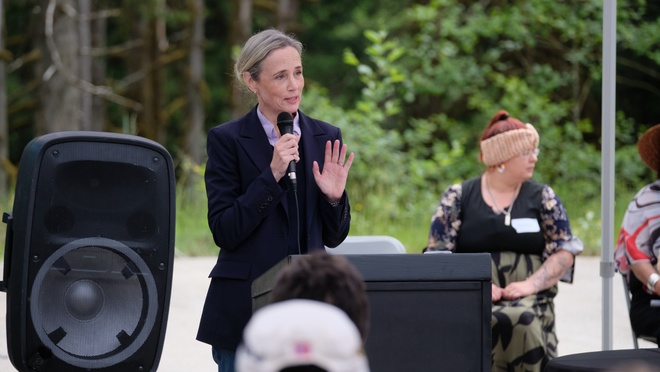

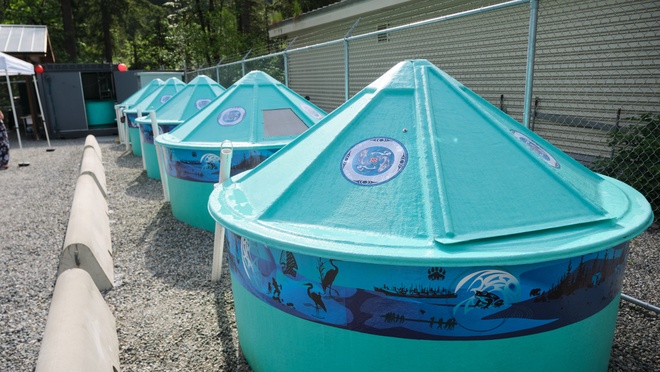
 Cultural recognition elements were integrated into the kʷikʷəƛ̓əm t́ák̓ʷ hatchery
On May 23, a new salmon hatchery in the skʷƛ̓əma:ɬ x̌acaʔ (Coquitlam Lake) Watershed was officially opened with a celebration that included members from the local kʷikʷəƛ̓əm First Nation, BC Hydro, Metro Vancouver and the Department of Fisheries and Oceans Canada.
The kʷikʷəƛ̓əm people have lived in their traditional territory in the skʷƛ̓əma:ɬ x̌acaʔ (Coquitlam Lake) Watershed since time out of mind. Their name in their traditional language means "Red Fish Up the River", referring to a run of spring sockeye salmon that once flourished in the territory.
In 1913, the Coquitlam Dam — which was built by the Vancouver Power Company, a predecessor to BC Hydro — fundamentally changed the lives of the kʷikʷəƛ̓əm people, impacting them spiritually, economically and culturally. When the dam was built, it significantly impacted salmon production within the watershed by creating an impassible barrier which prevented adult salmon from migrating from the ocean to Coquitlam Lake to spawn. Juvenile sockeye were trapped in the lake and could not migrate to the ocean to feed and grow.
"Watersheds were managed by our people to ensure this rich resource was plentiful throughout our lands to flourish," says kʷikʷəƛ̓əm First Nation Cultural Coordinator Nancy Joe. "This history of the Coquitlam Lake sockeye serves as a painful representation of the kʷikʷəƛ̓əm people's experience with colonization and one of the first real impacts witnessed by our families."
For more than two decades, kʷikʷəƛ̓əm First Nation has been actively involved in restoring the sockeye that once thrived in the Coquitlam River. In 2022, we embarked on a new parnership with the kʷikʷəƛ̓əm Salmon Restoration Program, Metro Vancouver and the Department of Fisheries and Oceans Canada, to work together with the Nation to bring sockeye salmon back to the watershed.
As part of our Coquitlam Tunnel Gates project, which replaced aging equipment in facilities at Coquitlam and Buntzen, we provided funding and help in building a hatchery that has the ability to produce up to 25,000 smolts per year over the next 10 years. This program also provided training and technical work experience for members of kʷikʷəƛ̓əm First Nation, contributing to employment opportunities in hatchery operations.
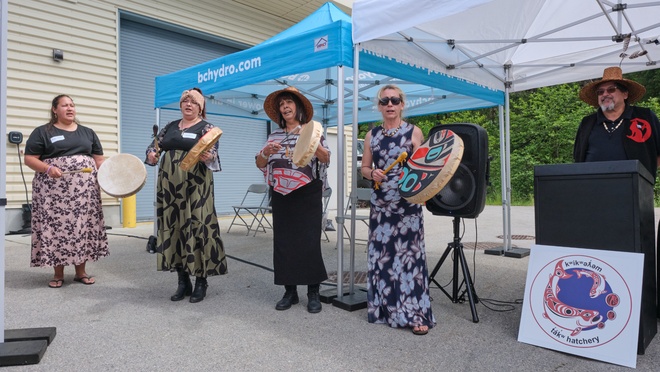 Performers helped celebrate the opening of the kʷikʷəƛ̓əm t́ák̓ʷ hatchery.
Celebrating the return of the salmon
While the hatchery began operations last year, May 23 marked not only a celebration of its opening, but also an opportunity to see much of the hatchery artwork, and the official unveiling of the hatchery logo. We joined members from kʷikʷəƛ̓əm First Nation, along with representatives from Metro Vancouver, City of Coquitlam, and the Department of Fisheries and Oceans Canada.
The hatchery itself has been named kʷikʷəƛ̓əm t́ák̓ʷ, which means "Red Fish up the River Return Home", representing the work that has been done by kʷikʷəƛ̓əm and their partners in welcoming the salmon back to their natural habitat. Since first becoming operational last year, the Nation has successfully released 9,000 Coho salmon fry into the Coquitlam Watershed as a test of the new hatchery and has already welcomed back five returning Sockeye salmon adult spawners to the hatchery.
"It's going to be amazing to see all those fish go back. It's heart-warming to see it all coming back," says kʷikʷəƛ̓əm First Nation Chief Ron Giesbrecht.
But the most important salmon to bring back is the sockeye.
"Some of our oldest teachings come from this area and one of those teachings is that we carry the name of the red fish," says kʷikʷəƛ̓əm Councillor John Peters. "That's why this is so important. It's helping us revitalize our name and who we are as a Nation."
A blessing ceremony formed a key part of the opening celebration to thank and honour the artists — Mike Stanley, Ashlee White, Kristinia Joe, and Rosalie Dipcsu — who contributed the cultural elements at the hatchery.
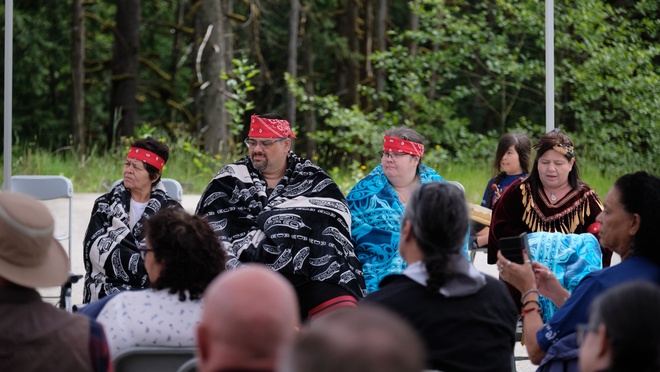 Four Indigenous artists were ceremonially recognized for their contributions of cultural elements at the kʷikʷəƛ̓əm t́ák̓ʷ hatchery.
BC Hydro Project Manager Mark Nichol and Indigenous Relations Specialist Melinda Boon held roles as family alongside kʷikʷəƛ̓əm members. Indigenous Relations Team Lead (and kʷikʷəƛ̓əm Relationship Lead) Phillip Van Huizen and Indigenous Relations Specialist Colleen Wickstrom also joined kʷikʷəƛ̓əm members as witnesses at the ceremony, being asked to observe, remember and later share what took place.
Accompanied by traditional singing and drumming, the ceremony symbolized protection and the return of spirit to the artists after they had poured so much of themselves into their work. The artists were blanketed and brought into a sacred space marked with cedar boughs, creating a safe environment for honouring, healing, and cleansing energy. Each artist shared a few words about their artwork before both the artists and the art were brushed with cedar. This brushing was an important moment, as the artwork had arrived in its new home and its spirit now resides there, while the energy given to the art was respectfully returned to the artists.
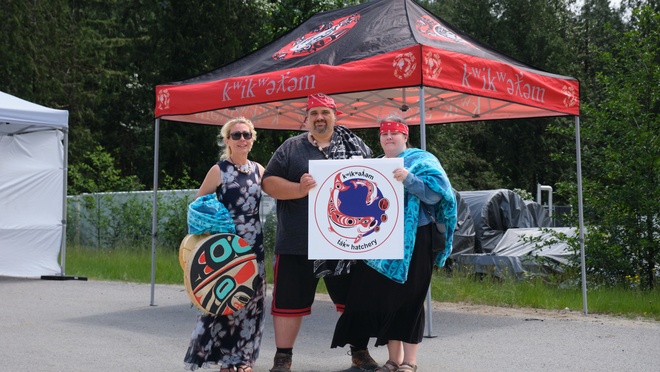 kʷikʷəƛ̓əm Cultural Coordinator Nancy Joe with artists Mike Stanley and Ashlee White holding the kʷikʷəƛ̓əm t́ák̓ʷ hatchery logo.
Guests at the celebration were also invited to participate in a self-guided tour the hatchery and learn how it will help restore the salmon population in the watershed.
"With this built here, the true healing of my community will start happening," said kʷikʷəƛ̓əm Councillor George Chaffee. "Everyone else has counsellors and doctors. Welcome to ours; this is what heals us. This is what we need as people in order to have a future for our children."
"This is not just an important environmental partnership, it's a visible reflection of collaboration, shared responsibility, and respect," said BC Hydro President & CEO Charlotte Mitha. "This is part of a much longer and broader reconciliation journey and we recognize that reconciliation is ongoing work."
The hatchery is just one of the ways that we're working with kʷikʷəƛ̓əm First Nation, with other initiatives including employment and training, and shared stewardship opportunities.