

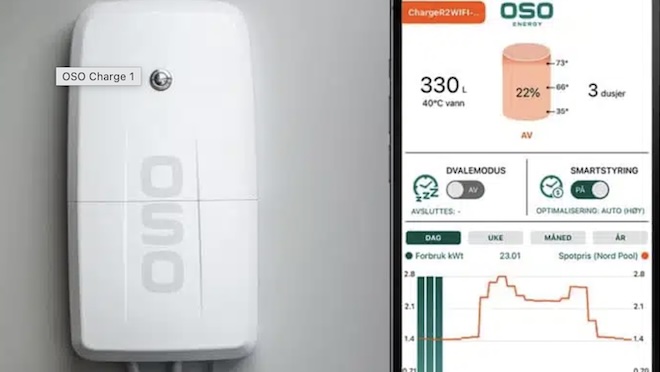
 Is it a good fit for B.C. homes? The OSO smart water heater – shown here alongside an insert of the device's phone app learns from the way you use hot water in your home and might save you money if you shift to our optional time-of-day pricing.
A look at cool products our innovation group is testing
Imagine the owners of hundreds of older office towers cutting their heating and cooling costs by as much as 40% with the simple application of window inserts — applied to the inside of existing single-pane windows — with no demolition, cranes, or scaffolding required.
Now envision a smart water heater that learns from your routine and helps you shift your energy use from peak times to take advantage of a lower electricity rate.
Or think of a smart panel that, again learning from the occupants' daily routines, provides control of power use in single-family homes and in apartment buildings, helps enable the addition of heat pumps or electric vehicle charging, and could lead to energy bill savings through off-peak pricing.
"We're looking for new innovations that do things better, faster, smarter," says Tim Mosley, head of our innovations, testing and trials team. "We look at residential, commercial, and industrial products and services, at things that can help with our energy efficiency or our capacity programs, our solar programs, and electric vehicles as well."
Mosley's Power Smart Innovation group is made up of researchers, testers, and IT specialists. Their work includes meetings with research partners, customers, vendors, and associations, but their focus is identifying products and testing them. The work includes high-level research by our subsidiary Powertech Labs, detailed technical analysis, lab testing, and customer site demonstrations and trials.
The idea is to find technologies that are a fit for customers in B.C. — via innovations sometimes hatched right here in B.C. — that can benefit the individual customer while also helping us to more cost-effectively power homes and businesses in B.C. Some of them prove to have enough potential that we eventually offer incentives to fuel adoption in the province.
Here's a look at three new products we're looking at right now.
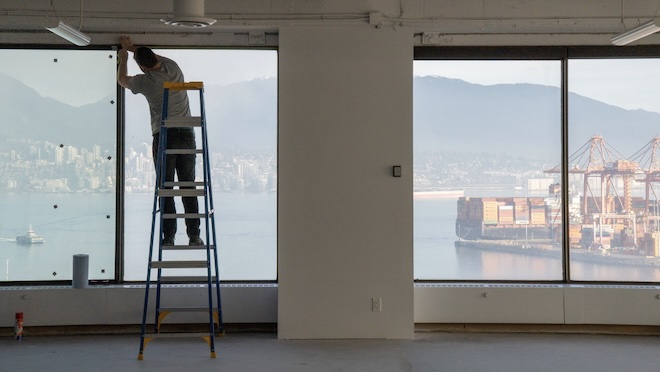 Taiga, a transparent window insert, is installed to the inside of existing single-pane windows at Harbour Centre in Vancouver.
A double-pane upgrade without the pain
An estimated 2 billion square feet of commercial buildings in North America still use single-pane windows. TwinGlaze, a Vancouver company, is out to change that with Taiga, a double pane window insert that upgrades existing windows without replacing them. Installed from the inside, the makers of Taiga assert that it will pay for itself in reduced energy bills in just a few years, with no need for scaffolding or major building envelope disruption.
The company claims the panels offer draft and sound reduction, along with energy savings of 40% over single-pane windows. Now it's up to Mosley’s team to determine if that claim pans out. We're funding tests of buildings at the University of B.C. and Harbour Centre in Vancouver.
"The advantages of these inserts are that the existing window frame remains, and because installation happens from the inside, it’s safer and less costly because there’s no need for cranes or scaffolding," says Mosley. "We're currently testing both the performance and install process for these inserts in these two buildings."
A smart water heater that helps shift your electricity use
Self-learning and responsive, OSO hot water tanks understand customer hot water usage profiles and can be used to deliver hot water only when it’s needed. In the process, electricity use can shift away from times of peak energy demand on our electrical grid and, with a switch to optional time-of-day pricing, can pay off in bill savings.
The OSO tanks — designed by a long-standing Norwegian company — heat water to a slightly higher temperature than normal, which increases their flexibility. They don't use significantly more energy, but we like that they could help the grid by reducing peak power demand.
"We're testing these tanks with customers in Vernon to see how well they respond to direct response signals," says Mosley, referring to our signals sent to enrolled devices so that they decrease electricity use during times of very high demand on the electrical system. "We also want to see how well these tanks manage the balance between supplying hot water to the customer and avoiding high energy use at times of peak demand."
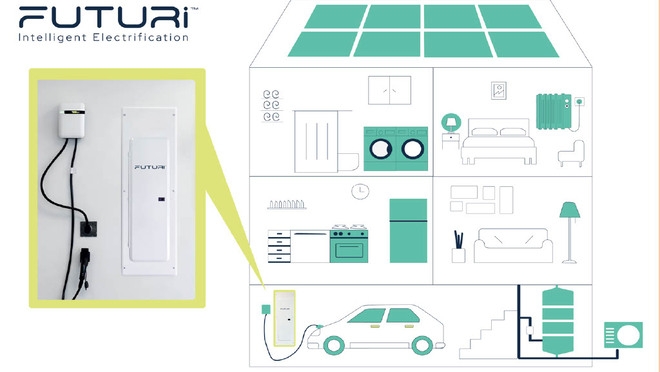 As B.C. residents look to take advantage of affordable electricity to add the likes of solar generation, battery storage, and electric vehicle charging to the home, FUTURi's smart electrical panel arrives as a way to better monitor and manage electrical loads.
A smart panel that helps apartment buildings electrify
FUTURi Power's smart panels are smart learning panels that can be used to avoid costly service upgrades and better manage the addition of electrical devices including air-source heat pumps and electric vehicle chargers without needing to overhaul existing wiring or infrastructure.
The Innovation team is testing the performance and capabilities of these panels, which are designed and locally produced by Vancouver's FUTURi Power and are meant to replace existing electrical panels. These panels can manage a home's power draw so that the existing service is not overloaded.
The panels are also able to learn a customer's usage profile and optimize the use of electricity to maximize the benefits of off-peak pricing. That makes both our customers happy and us happy, as reducing electrical loads at peak times means we don’t have to constantly build or upgrade infrastructure. And that helps keep our electricity rates affordable.
"We're currently testing the performance of these panels at 25 homes across the Lower Mainland and Vancouver Island, and we are looking for a few more homes to add to this group." says Mosley. "Our hope is that the panels work well enough to help speed up the process of electrification for customers while also reducing peak demand on our grid."
FUTURi is led by Dr. Martin Ordonez, a globally recognized expert in electrification and the advancement of clean, resilient energy systems. The company was founded out of the UBC Power/Energy Lab at the University of B.C.
Other tech we're testing, and how you can get involved
Our innovation team often recruits customers to test devices in residential, commercial, and industrial applications. It also works with the BC Hydro Alliance of Energy Professionals — a network of B.C. contractors, consulting engineers, and product distributors — to recommend new products and provide feedback on how well they're working.
"We spend a lot of time looking at technologies, at new products and services, kind of kicking the tires to see, does it work?" says Mosley. "Does it do what it's supposed to do? Does it perform as the customer, vendor, or installer expects?"
Mosley's team regularly manages residential installations that demonstrate new energy management devices. But they face hurdles in securing commercial and industrial trials, which can be difficult to find despite the funding we have available for demonstration projects.
You can learn more about our testing and about our year-round recruiting for customers on our innovation, demonstrations, and research page. And you can sign up to be alerted when we're recruiting customers.
We’re busy chasing products and setting up testing. Here are a few other technologies currently on our list:
- Heat pump alternatives to portable room AC unit.
- HVAC unit coil cleaning, including UV treatments and other options that can provide more efficient operation and energy savings.
- Phase change cooling (PCM) in HVAC ducts. Liners or panels inside ducts can pre-cool air flow, reducing peak cooling loads on compressors.
- Demonstration and testing of new formats of solar generation.
- Plug-in solar technologies, including balcony solar units.
- Advanced window retrofit technologies, such as the TwinGlaze insert solution described above, that either supplements existing windows or replaces glazing to significantly improve thermal performance.
- Vertical solar generation. We’ve funded a vertical solar panel pilot project on the roof of Vancouver’s Science World and are looking to also trial it in colder areas of B.C., as the European technology offers snow shedding and wind shear benefits.
- Passive cooling demonstrations.
- Next generation heat pump technologies, such as 3-in-1, on-demand hot water and solid state heat pump products.
- New formats of high-temperature thermal storage for multi-unit residential, commercial, and industrial sites.
- Rooftop and vertical axis micro wind generation.
- Electrostatic air filters, which can reduce fan power consumption, improve air quality and lower service costs.
- Solar PVT technologies, hybrid systems that generate both electricity and heat (such as for hot water heating) simultaneously.
- Use of phase change materials (PCM) for residential space heating and hot water heating. PCM are substances that store and release large amounts of thermal energy (heat or cold) by transitioning between solid and liquid phases at specific temperatures.